

Quick Answer: Essential Legal Details for Email Signatures
For a globally compliant signature that captures the essential requirements for most business emails, you should include the following elements:
- Company Name: Your full registered name (e.g., InboxSign Ltd).
- Registration Number: Your official company ID (e.g., CRN in the UK).
- Registered Office Address: The physical location where legal papers are served.
- Country of Registration: The region where your business is officially filed.
- Primary Contact Details: A valid phone number or email address.
These elements satisfy baseline requirements across most global jurisdictions for business communication.
When Are Email Signatures Legally Required?
A common professionalism gap in corporate branding is knowing *when* the legal footer is actually triggered. In most jurisdictions, strict disclosure is required when an email serves as:
- Official Business Communication: Any email sent on behalf of the company to an outside party.
- Invoices & Receipts: Financial documents that legally identify the transacting entities.
- Commercial Outreach: Cold emails, sales pitches, or any marketing communication.
- Corporate Representation: Contracts, legal notices, or employer-employee correspondence.
A Note on Internal Communication: Internal emails between employees are typically not subject to the same disclosure requirements as external messages. However, many organizations apply a consistent company-wide signature policy to maintain professional standards and internal clarity.
UK Companies Act 2006 Requirements
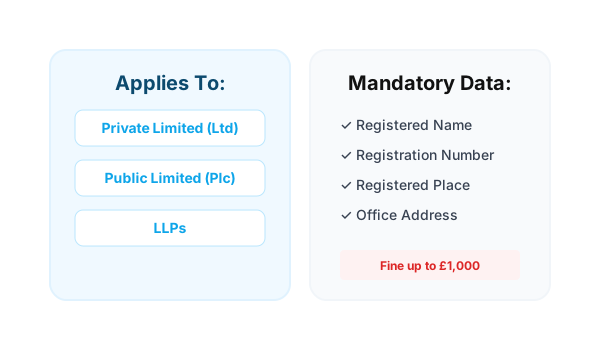
If your business is a private or public limited company (Ltd or Plc) or a Limited Liability Partnership (LLP) registered in the UK, you are legally required to include specific details in every business email, website, and invoice.
Mandatory Information:
- Your company's full registered name (e.g., "InboxSign Ltd").
- Your company registration number (CRN).
- The place of registration (e.g., "Registered in England and Wales").
- The registered office address.
Enforcement: While the maximum fine is £1,000, in practice, enforcement usually follows a warning; however, serial non-compliance can trigger significant per-breach audits.
EU & GDPR Compliance Standards
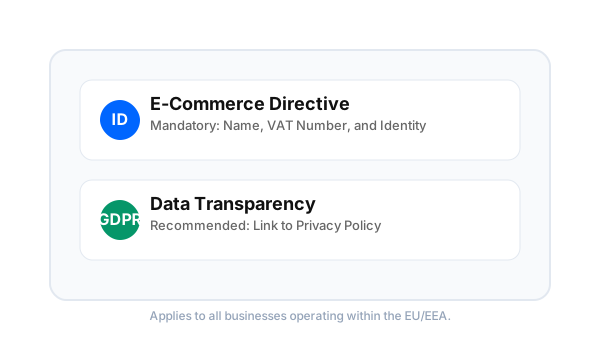
Under European law, specifically the E-Commerce Directive and GDPR, businesses must provide clear corporate identification and manage data transparency.
A) E-Commerce Directive (Legal Identity)
Businesses are generally required to provide their physical identity clearly, including:
- Company name and registered address.
- A VAT Number (if your business is VAT registered).
- Clear contact info (email and phone number).
B) GDPR (Data Handling Context)
While GDPR does not explicitly mandate a specific signature layout, it impacts your "Duty of Information" and data transparency. It is strongly recommended to include a link to your Privacy Policy, especially if you use tracking pixels or process recipient data for marketing.
US CAN-SPAM Act Standards
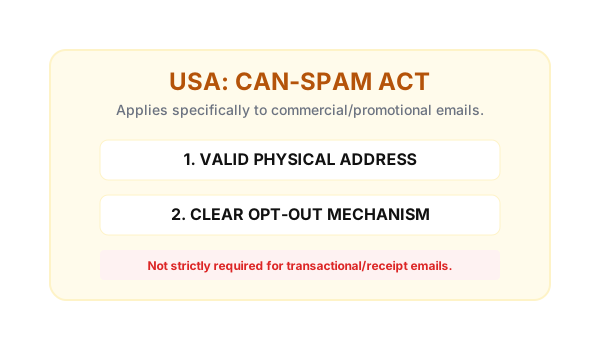
In the United States, the CAN-SPAM Act is the primary driver of email footer requirements. It is important to differentiate between the two types of emails:
- Commercial/Promotional Emails: MUST include a valid physical postal address and a clear, conspicuous "Opt-out" or unsubscribe link.
- Transactional Emails: (Invoices, receipts, or shipping updates) are NOT required to follow the strict CAN-SPAM footer rules, though including a physical address remains a best practice for building trust.
Do Legal Disclaimers in Email Signatures Matter?
The use of lengthy legal disclaimers (e.g., *"This email is for the intended recipient only..."*) is common in fields like legal firms and financial services, but their legal weight is often debated.
While not legally required in most jurisdictions, disclaimers are used for:
- Liability Limitation: Stating that opinions expressed are those of the author, not the firm.
- Confidentiality Notices: Warning unauthorized recipients not to disclose content.
- Contract Formation: Clarifying that an email does not constitute a final agreement.
While they may not offer absolute legal immunity, they signal professional intent and provide a layer of protection in corporate liability disputes.
How to Structure a Legally Compliant Email Signature
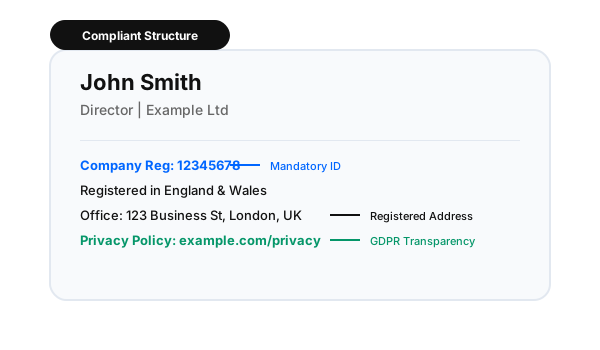
To maintain a professional hierarchy while meeting legal benchmarks, use this layout as a template:
John Smith
Director, Example Ltd
Company Reg: 12345678 | VAT: GB 123 4567 89
Registered in: England & Wales
Address: 123 Business St, London, EC1A 1BB, UK
Privacy Policy: example.com/privacy
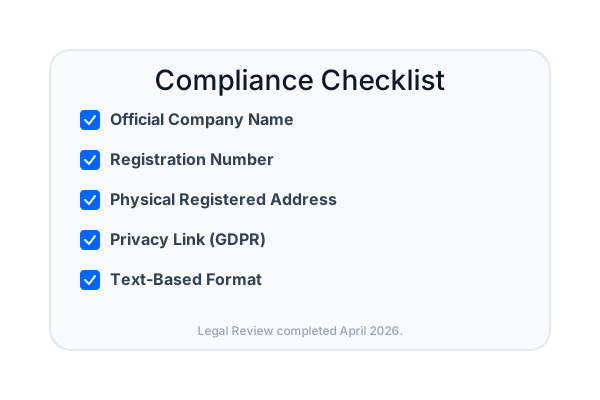
Legal Compliance Checklist
- Company name included (full registered name).
- Registration number present (mandatory in UK/EU).
- Registered address included (physical office location).
- Privacy policy linked (where data and cookies are used).
- Readable text used (avoid trapping legal info in images).
- Unsubscribe option present (for all marketing/commercial emails).
Build a Compliant Brand Strategy
If you're unsure whether your signature meets global legal standards, using a structured template can help maintain consistency across teams and ensure required details are not missed. A standardized approach ensures that every outgoing email reflects your company's professional identity and legal transparency.
*Technical and legal review completed for 2026 global standards.*